




SILK & FABRICS
Chosen for the way they move
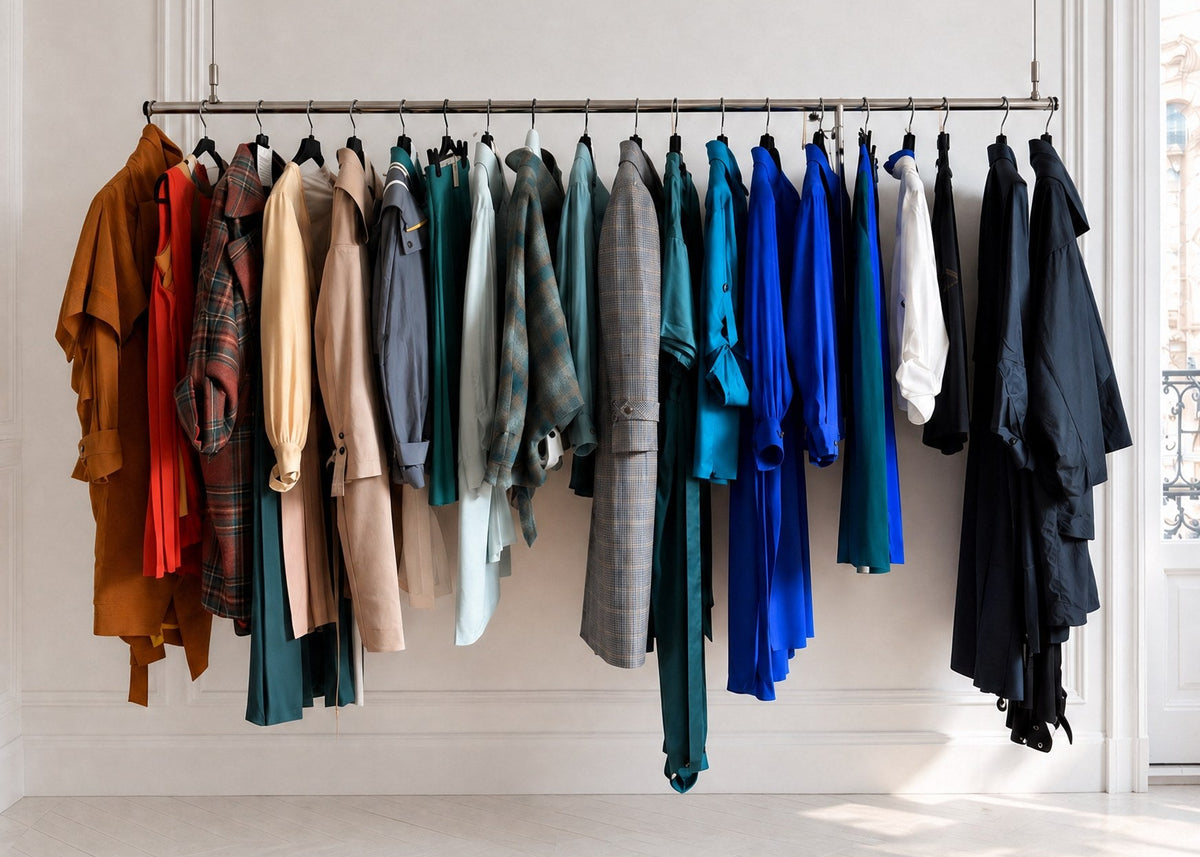
Weight, surface, transparency and drape. Before a silhouette exists, there is a material that decides how it will live on the body.
THE HOUSE MATERIAL
Silk, in all its states
Silk is central to the house for its lightness, its fluidity and its extraordinary relationship with colour. No other fibre answers light in the same way.
Crepe has a matte, slightly grained surface and a heavier fall. It holds a line and forgives creasing, which makes it the material of shirts worn all day.
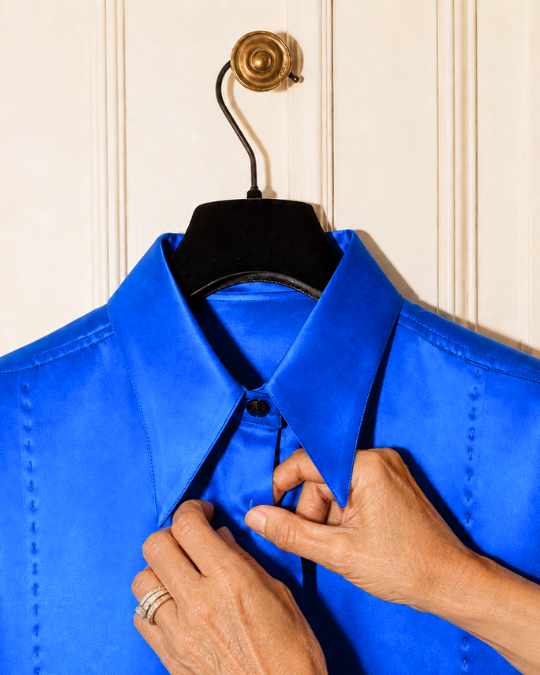
Satin reflects. It turns a colour into something deeper and more liquid, and asks for a clean line, because it shows everything.
Chiffon is almost weightless and transparent. It is used in layers, for sleeves and panels that move with the body rather than around it.
Organza brings volume without weight. It holds a shape in the air, which is why it appears in ceremonial pieces.
Jacquard carries its pattern in the weave itself, never printed on the surface. The design is visible on both faces, in reverse.


STRUCTURE
Wool, linen and cotton
Where silk brings movement, these materials bring structure and season.
Wool and lambswool hold a shoulder, a lapel, a pleat. They are chosen for tailoring, coats and the pieces that need to keep their line through a day.
Linen creases, and that is the point. It brings a dry hand and a lightness that no treated fabric imitates convincingly.
Cotton, including seersucker with its woven pucker, carries the pieces that live outdoors and in summer.
Technical fabrics and nylon appear where the piece must protect: raincoats, bombers, and outer layers that face weather rather than an occasion.
COLOUR
A colour is never one colour
The same shade changes with the material that carries it. On crepe it is matte and grounded, on satin it deepens and reflects, through chiffon it becomes a veil of itself.
This is why the palette is developed in material rather than on paper, and why a colour is only validated once it has been seen woven, draped and lit.
The families below follow that logic. They move from the tones that hold a wardrobe together to the shades that carry it.

The house palette
Seven families, from the neutrals that anchor a wardrobe through to the greens. Each shade links to the pieces currently cut in it.
Neutral
Shop the edit →




Yellow
Shop the edit →





Pink
Shop the edit →





Violet
Shop the edit →


Blue
Shop the edit → Mist Blue
 Light Blue
 Ocean Blue
 Azure Blue
 Electric Blue
 Sapphire Blue
 Intense Blue
 Morpho Blue
 Indian Ocean
 Lagoon Blue
 Sky Blue
 Night Blue
 Antique Blue
 Slate Blue
 Navy Blue
 Blueberry
Green
Shop the edit → Mist Green
 Pastel Green
 Sky Green
 Californian Blue
 Fresh Green
 Petrol Blue
 Blue Deep Sea
 Jade
Jade Peacock Green
 Apple Green
 Olive Green
 Khaki
Khaki
